
Week 3
- dcm0062
- Aug 30, 2021
- 7 min read
Updated: Aug 31, 2021
Vegetable Stock, Brown Stock, and Minestrone Soup
Overview of Basic Knowledge
My basic knowledge of vegetable stock, brown stock, and minestrone is very amateur. I have never cooked such things in my life but, have rather taken the easy way out by buying them pre-made from a grocery store. Thus, I believe it is best fitting that we start from the beginning.
Learning Objectives
List the different cuts of vegetables
Articulate the principles of making stock
Prepare a vegetable stock
Understand the different classifications of soup
Produce a broth soup
Practice the costing of menu items
Vegetable Cuts
In cooking stocks and soups it is critical that an immense understanding on proper vegetable cuts is established. Every different cutting technique is used to produce a different taste and consistency within a dish. There are many different and unique ways to cut vegetables for stocks and soups, so having a clean understanding of when such cuts apply is vitally important.
Cuts

Brunoise (Fine Dice)
With this particular cut the vegetables/fruit are cross cut then sliced across the cuts. This technique is primary used with turnips, onions, and carrots.
Chiffonade (Shredding)
This cutting method is used to cut leafy vegetables and herbs. Such as cabbage, spinach, lettuce, and a large variety of herbs. You first cut the food of choice into long strips in then cut horizontally along the strips to the ideal thickness.
Julienne (Match Stick Cuts)
The julienne approach allows for long thin pieces of the desired food, similar to a "chicken strip." Vegetables commonly cut this way include zucchini, celery, and capsicum, but, this method can be applicable to almost every type of vegetable.
Macedoine (Large Dice)
This technique is purposely used to cut vegetables into large, cube like shapes. This approach is most commonly used for preparing vegetables for a soup or stock. Furthermore, this type of cut can be utilized for large fruits like melon and cantaloupe.
Slicing
The slicing approach is applicable when attempting to get a thin, broad slice, for a large array of vegetables, fruits, and meat.
Mincing
Mincing is similar to the Brunoise (Fine Dice) but, has an even smaller cut diameter. This cut is the method used to obtain the smallest pieces of vegetables possible. It is critical that you keep your hand at the tip of the knife to keep the tip on the cutting board. Once, you hand is firmly on the tip of the knife you continue bringing the handle towards the cutting board in a fast motion.
Roll-Cutting
The objective for this cutting approach is make the most appealing pieces. Also, this cutting method allows for the food to be more exposed. The idea for this cut is to have both sides of the food have an angled cut. This is commonly used on carrots, squash, and parsnips.
Parallel Cutting
This cutting method is used when wanting to obtain large, thin slices of food, almost thin enough to see through. The most efficient and diligent way to approach this cut is by placing your knife parallel to the cutting board while making your slices.
Crushing
This technique is most always used on garlic and ginger but, is sometimes applied to other foods. When "crushing" you place the side of the knife on top of the choice of food and press down onto the cutting board. This allows for cracking a shell/skin/rind or extraction of liquid within a food.
Principles of Making a Stock

The base characteristics of a good stock are the following: body, flavor, clarity, and color. Stocks MUST always be started in cold water. As the water begins to heat up, impurities will thicken causing them to rise to the surface. Once this happens begins skimming the top of the stock to eliminate the impurities. Gently simmering vegetables or bones allows for optimal flavor extraction for the stock. Stocks should first be brought to a boil of around 185 degree Fahrenheit then brought to a simmer. Once the stock is complete is critical that the ingredients are not disturb. Disturbing the ingredients will cause poor color. The final step is too strain the stock through multiple layers of cheese cloth and a china cap.
Difference in Soup and Stocks
The main and most critical distinction between a soup and stock is that a stock is what starts off a great soup. Without a stock there is no soup but without a soup there is still a stock. A stock is the foundation of what the soup is to become. Stock is extracted of its ingredients that made it what it is and soup will still contain thus ingredients.
Research of Dishes
Origin and History
Stocks- Stocks orientated during the middle ages primarily for the use and reuse of left over food. Waste not want not. They would cook stocks over an open fire and using a cauldron. Stocks are most famously associated with French cuisine. Stocks since then have come along way, and are used throughout the world to create excellent cuisine.
Minestrone Soup- This elegant and delicious dish first originated in Italy hundreds of years ago. It began to take off when the Rome conquered Italy due to how abundant vegetables became due to economic growth. Italian peasant used to call minestrone soup "poor man's soup" because back then it was primarily made from left over food.
Variations of Dish
Stocks- It is difficult to establish how many variations of stocks exist because any combination of ingredients can be transformed into a stock. But, in recent times four basic stocks have been administered. White stock, vegetable stock, fish stock, and brown stock.
Minestrone Soup- Similar to stocks, minestrone soup has endless possibilities because such a large variety of foods can make minestrone soup.
Recipes
Vegetable Stock (4 Portions)
Ingredients Weight Volume
Onion 4oz
Carrot 4oz
Celery 4oz
Leek 4oz
Water 50fl. oz.
Parsley Stalks 4ea
Peppercorns 6ea
Directions
1. Cut all vegetables into macedoine.
2. Place all ingredients into a pot with cold water and bring a boil.
3. Once water boils(185F) bring to simmer
4. Gently simmer for 1 hour.
5. Skim as needed while in skimmer.
6. Strain and use.
Brown Stock (21 Portions)
Ingredients Weight Volume
Bones/Veal/Beef 19.2oz.
Cold Water 31 fl. oz.
Mirepoix 2oz.
Tomato Paste 19 g.
Bouquet Garni:
Bay Leaves 1ea
Dried Thyme 1 g.
Peppercorns 1 g.
Garlic Cloves 1 knob ea
Parsley Stem 1ea
Directions
1. Place bones in roasting pan, one layer deep, and caramelize them in a 375F (190C) oven. Turn bones occasionally to brown them evenly.
2. Remove bones and place them in a stockpot. Pour off the fat from the roasting pan and reserve it.
3. Deglaze the roasting pan with part of the cold water.
4. Add the deglazing liquor and the rest of the cold water to bones, covering them completely. Bring to a boil and reduce to simmer.
5.Add a portion of the reserved fat to the roasting pan and saute the mirepoix until evenly caramelized. Add the tomato paste and continue cooking until the tomato paste and mirepoix are a deep brown color. Add the mixture to the simmering stock.
6. Add the sachet to the stock and continue to the simmer for 6-8 hours, skimming as necessary.
7. Strain, cool, and refrigerate.
Minestrone Soup (4 Portions
Ingredients Weight Volume
Onions 4oz
Olive Oil 1/2 fl oz.
Carrots, Peeled, Medium Dice 2ea
Celery, Medium Dice 3ea
Zucchini, Medium Dice 3oz
Garlic Cloves, finely Chopped 2ea
Tomato Paste 1oz
Tomato Concassee 4oz
Vegetable Stock 2.5 pints
Dry White Beans 2oz
Dry Spaghetti, Short Lengths 3oz
Green Cabbage, Finely Shredded 4oz
Bouquet Garni: 1ea
Fresh Basil, Chiffonade 1 Tbsp
Fresh Parsley, Chopped 1 Tbsp
Salt TT
Black Pepper TT
Directions
1. Soak beans overnight in cold water, drain and rinse before use.
2. Simmer the beans in a pot until tender.
3. Sautee the onions, celery, zucchini, and carrots in oil in a saucepan over medium heat (3 mins).
4. Add garlic and cook for a further minute.
5. Add tomato paste and cook for a further 3 minutes.
6. Add tomato concassee and stock. Reduce the heat to a gentle simmer and cover with a lid and cook for 15 minutes.
7. Add the pasta and cook for 10 minutes.
8. Add the cooked beans and the cabbage and cook for a further 2 minutes.
9. The volume of liquid may need to be adjusted, if so, add more stock.
10. Add herbs and season with salt and pepper to taste.
Plan of Work
1. For my plan of work I plan on getting all my pots ready to go with cold water.
2. I will then go about cutting up the vegetables that each recipe shares.
3. I will now transfer over to completing the rest of the vegetable anomaly for each recipe.
4. Once I get all the ingredients done for one dish I will begin cooking it. So that my times are slightly staggered.
5. During the boiling period I will prep for the final steps.
6. Once a boil is reached I will get pots to a simmer and begin skimming out the imperfections.
7. Lastly I will finish off each dish separately since I am cooking them all slightly off but, not to far apart.
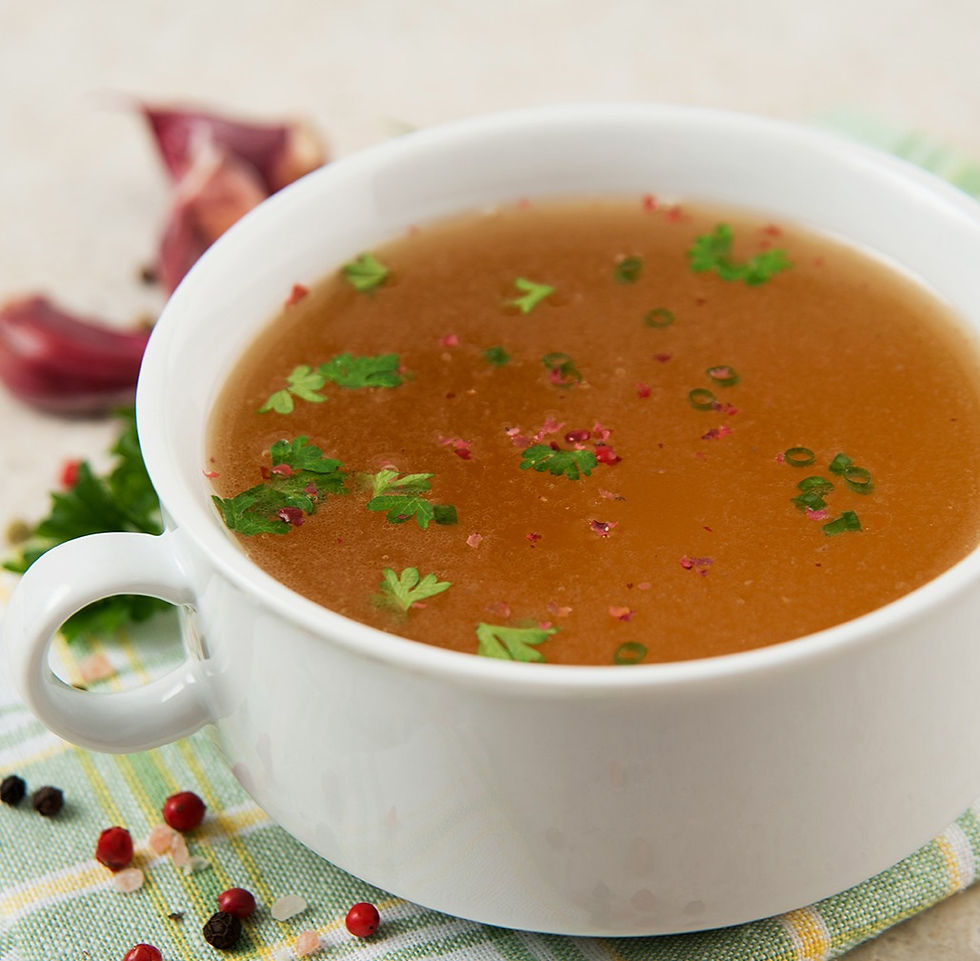
Plate Representation


Research Citations
The different types of vegetable CUTTING STYLES. Wood Cutting Boards. (n.d.). https://www.woodcuttingboards.com/news/the-different-types-of-vegetable-cutting-styles-170.aspx.
The history of minestrone soup: What is it and how is it made? Classic Italian Cuisine in Portland, Oregon. (n.d.). https://www.denicolasitaliandining.com/blog/the-history-of-minestrone-soup-what-is-it-and-how-is-it-made#:~:text=Minestrone%20has%20a%20rich%20history,vegetables%20to%20flood%20the%20market.
Minestrone, history, recipe and variations. Article & Review Writer. (n.d.). https://articlereviewwriters.weebly.com/minestrone-history-recipe-and-variations.html.
Green, C. (2020, March 25). The etymology of stock and broth. Chelsea Green Publishing. https://www.chelseagreen.com/2017/etymology-stock-broth/#:~:text=To%20understand%20the%20difference%2C%20you,a%20building%20block%20for%20cooking.&text=The%20word%20stock%20is%20of,%E2%80%9Ctrunk%E2%80%9D%20in%20Old%20English.
Labensky, S. R., Martel, P. A., & Hause, A. M. (205.). On Cooking: A Textbook of Culinary Fundamentals, 6/e. Retrieved from https://platform.virdocs.com/r/s/0/doc/395669/sp/17707990/mi/59019641?cfi=%2F4%2F2%5BP7001015078000000000000000003183%5D%2F14%5BP70010150780000000000000000273A9%5D%2C%2F1%3A227%2C%2F1%3A227&menu=index
Labensky, S. R., Martel, P. A., & Hause, A. M. (n.d.). On Cooking: A Textbook of Culinary Fundamentals, 6/e. Retrieved from https://platform.virdocs.com/r/s/0/doc/395669/sp/17707999/mi/59019674?cfi=%2F4%2F2%5BP7001015078000000000000000003F4C%5D%2F2%2F2%5BP7001015078000000000000000027F99%5D%2C%2F1%3A0%2C%2F1%3A0&menu=table-of-contents
Picture Citations
Brown Stock. (2016). Basic Brown Stock. https://www.wozupi.com/blog/recipe/basic-brown-stock.
Cheif, M. (2021). Vegetable Stock. Learn How to Make Homemade Vegetable Stock: Easy Stock Recipe. Learn How to Make Homemade Vegetable Stock: Easy Stock Recipe.
ReseFunke, L. (2021). Minestrone Soup. Classic Minestrone Soup. https://fitfoodiefinds.com/vegetable-minestrone-soup/.


Comments